



How to make your business more efficient with AI automation: the 8 most widely used AI automations in e-commerce

What is AI automation?
AI automation in business means processes where artificial intelligence helps carry out repetitive, data-heavy or time-consuming tasks. These can include answering customers, writing product descriptions, recommending products, analysing data, planning stock or optimising advertising.
Put simply, AI automation helps a company do faster what a person would otherwise do by hand.
That does not have to mean AI fully replaces an employee. In most cases it works best as an assistant that prepares a draft, flags a problem, speeds up routine work or recommends the next step.
Why does AI automation matter for online stores?
Online sales are built on data, speed and personalisation. Customers expect an immediate answer, relevant products, accurate information and a simple buying process.
AI can help an online store mainly in these areas:
- fewer manual tasks,
- faster customer support,
- better product descriptions,
- higher conversion rates,
- more effective marketing,
- better stock planning,
- more accurate product recommendations,
- better use of reviews,
- fewer errors in product data management.
What matters most for an online store owner is that AI automation does not have to be a big technology project. It is often enough to start with one specific process that takes up most of the company’s time today.
What are the most widely used AI automations in e-commerce?
The most widely used AI automations in e-commerce are customer support, product description writing, personalised recommendations, email marketing, ad campaigns, demand forecasting, pricing, AI search and automated review management.
Let us look at them in more detail.
1. AI customer support in an online store
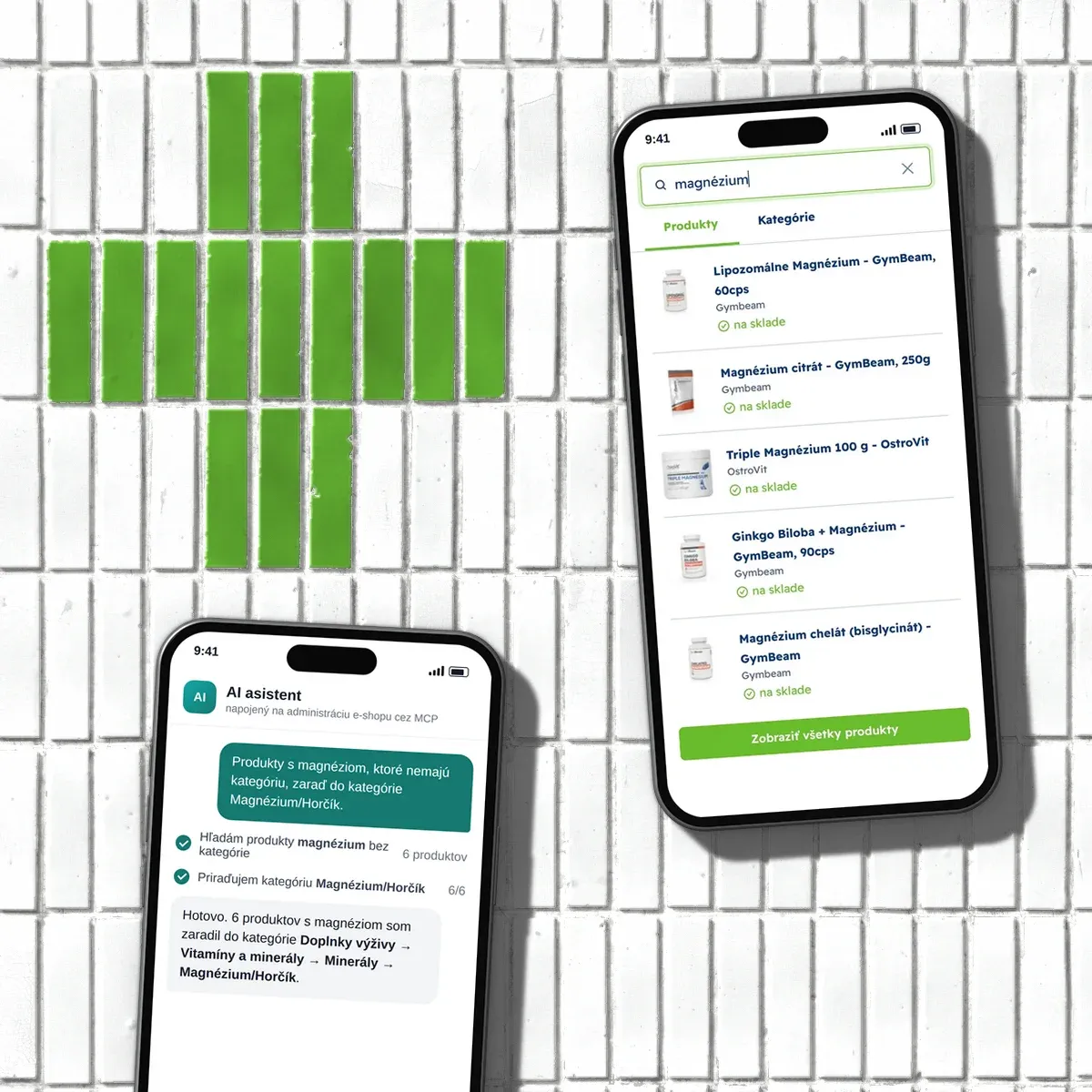
AI customer support is one of the most common AI automations in e-commerce. It helps online stores answer customers’ recurring questions without a person having to handle every query.
An AI chatbot or AI assistant can answer questions such as:
- Where is my order?
- How can I return an item?
- What is the delivery time?
- Is the product in stock?
- What is the difference between these products?
- How do I choose the right size?
- When will my parcel arrive?
- How do I report a faulty product?
AI support is most valuable when it is connected to the online store’s real data: orders, stock, the product catalogue, carriers, the complaints policy and frequently asked questions.
An AI assistant like this does not give generic answers. It can give the customer specific information, for example the status of their order or whether a product is in stock.
Who is this automation for?
AI customer support suits online stores that handle many similar questions every day. Typical examples are stores selling fashion, electronics, cosmetics, dietary supplements, furniture, sports equipment or any range that prompts frequent pre-purchase questions.
2. Automated product description writing
AI can greatly speed up writing product descriptions, SEO copy, meta descriptions, product names, category descriptions and ad copy. For online stores with a large number of products, this is one of the most practical automations.
AI can create:
- a short product description,
- a long product description,
- a technical description,
- sales copy,
- an SEO title,
- a meta description,
- a category description,
- alt text for an image,
- a translation of the description into another language,
- copy for Google Ads or Meta Ads.
It is important that the AI does not make up information. It works best with existing product data: the product name, attributes, brand, material, dimensions, colour, use and target group.
What is the advantage of AI product descriptions?
The main advantage is speed and consistency. An online store can create hundreds of descriptions in a uniform style, with a focus on SEO and selling points. A copywriter or administrator then only has to check and edit the copy.
3. AI product recommendations
AI product recommendations help customers find products that may interest them. This is one of the most important automations for increasing average order value and conversion rate. How do AI product recommendations work?
AI can recommend products based on:
- purchase history,
- products viewed,
- the behaviour of similar customers,
- product similarity,
- season,
- stock availability,
- margin,
- popularity,
- the likelihood of a repeat purchase.
Examples include blocks such as:
- You might also like.
- Customers also bought.
- Recommended accessories.
- Similar products.
- Best alternative.
- Products that go with your choice.
Why do AI recommendations matter?
Because customers often do not know exactly what they are looking for. A good recommendation system helps them discover relevant products without having to browse the whole catalogue by hand.
In practice, AI recommendations help most on the product page, in the basket, in emails, in retargeting and in post-purchase communication.
4. AI email marketing and marketing automation
AI in email marketing helps you make better decisions about who to email, when and with what content. Traditional automation often ran on simple rules and a workflow prepared by an email marketing specialist. AI can also work with the likelihood of purchase, customer behaviour and purchase history.
AI can help with:
- writing email subject lines,
- personalising content,
- choosing products for the newsletter,
- customer segmentation,
- abandoned baskets,
- win-back campaigns,
- post-purchase communication,
- recommending the next purchase,
- testing different versions of copy.
What questions does AI answer in email marketing?
When should I send a customer an email?
AI can work out when a customer most often opens emails or makes a purchase.
Should I send everyone a discount?
It may not pay off. AI can help estimate which customers will buy even without a discount.
Which products should I put in the newsletter?
AI can recommend products based on purchase history, season or the customer’s interests.
5. Dynamic pricing and competitor monitoring
AI pricing helps online stores track competitor prices, their own margin, demand, seasonality, stock and product performance. Based on this data, it can recommend a suitable price or flag products whose price needs adjusting.
AI can track:
- competitor prices,
- product availability at competitors,
- your own purchase price,
- margin,
- sales velocity,
- seasonal fluctuations,
- stock levels,
- ad performance.
Should an online store let AI change prices automatically?
Not always. With pricing it is wise to start carefully. For many online stores it works better when the AI prepares recommendations and the final decision is made by a sales manager or the store owner.
Fully automatic pricing can be useful for large catalogues, but for smaller online stores it can be risky if the rules are not set up correctly.
6. Demand forecasting and stock automation
AI demand forecasting helps online stores estimate which products will sell, in what quantity and when. This matters especially for seasonal ranges, products with longer delivery times and stores with a large number of items.
AI can take into account:
- historical sales,
- seasonality,
- marketing campaigns,
- holidays,
- trends,
- weather,
- stock levels,
- supplier availability,
- return rates,
- margin.
Why does demand forecasting matter?
Because poor stock decisions cost an online store money. With too little stock, the store loses orders. With too much, it ties up money in the warehouse and squeezes cash flow.
AI helps find a more sensible balance between product availability and stock costs.
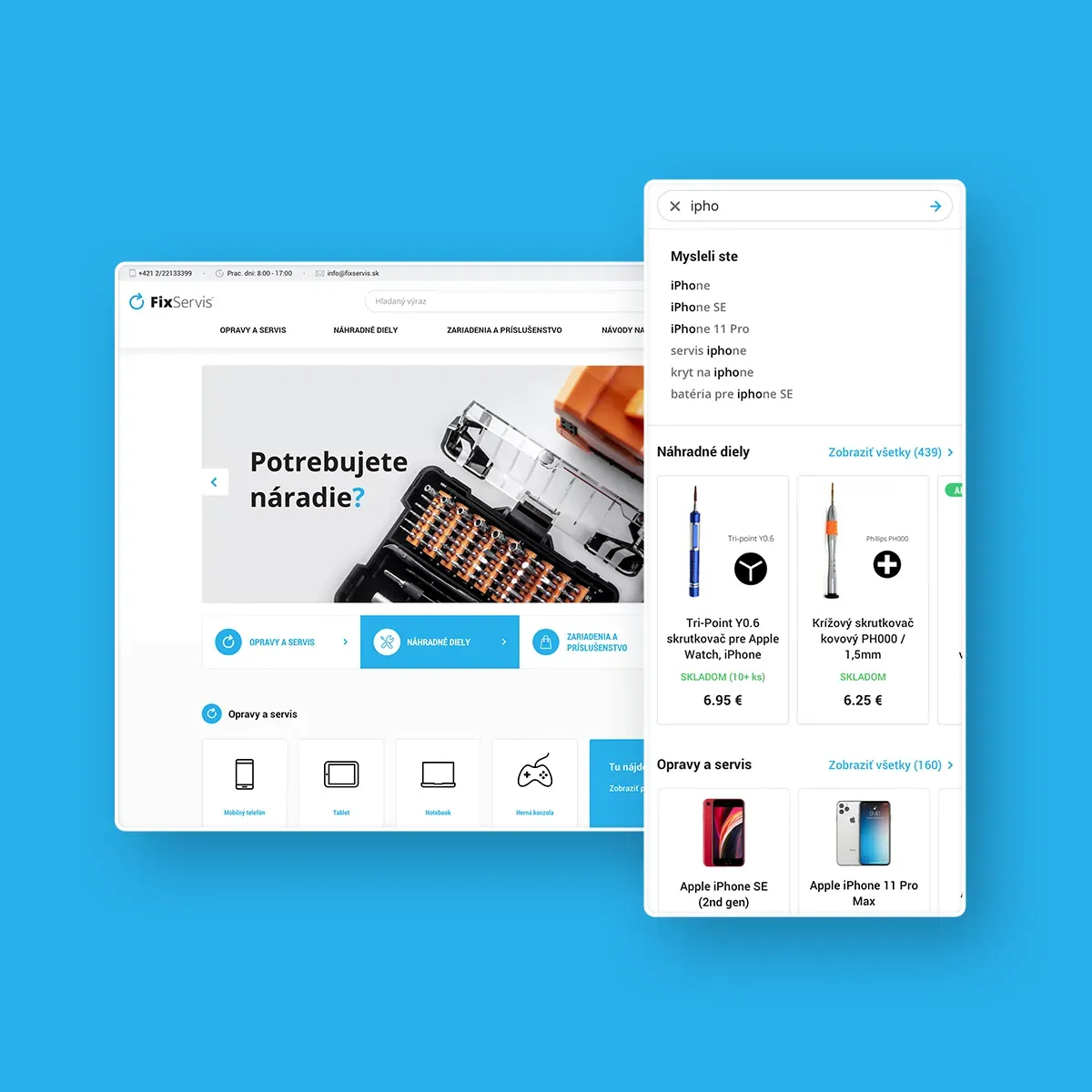
7. AI-powered search in an online store
AI search in an online store helps customers find a product even when they do not use its exact name. Traditional search often relies on exact keywords. AI search understands the customer’s intent better.
A customer might type, for example:
- “a gift for a dad who loves barbecuing”,
- “a cheap laptop for a student”,
- “cream for sensitive skin”,
- “a warm jacket for the rain”,
- “shoes for running on tarmac”,
- “gear for a first hike”.
The AI then picks relevant products, even if the customer did not use the exact name of the category or product.
When is AI search worth it?
AI search pays off mainly for online stores with a large catalogue, technical products, fashion, cosmetics, hobby products or items that customers often cannot name precisely.
8. Review and rating automation
AI can automate the collection, analysis, translation and evaluation of reviews. Reviews matter for online stores because they affect both customer trust and the conversion rate.
AI can help with:
- sending review requests,
- sorting reviews,
- sentiment analysis,
- translating reviews,
- combining reviews from different sources,
- identifying problems with a product,
- choosing the best reviews to display,
- detecting suspicious or fake reviews.
What is the practical benefit of AI review analysis?
If the same problem keeps coming up for a product, the AI can pick it up. For example, if customers write that a product is smaller than they expected, the online store can adjust the description, the size chart or the size recommendation.
Automation like this helps reduce returns and improve the customer experience.

Lesser-known AI automations in e-commerce that are gaining attention
Besides the common AI automations, there are also less widespread solutions that not every online store uses yet. These niche automations can be an interesting competitive advantage.
1. How can AI reduce the number of returned orders?
AI can help reduce the return rate by analysing reasons for returns, reviews, sizes, customer behaviour and product data.
For example, it can flag:
- which products are returned most often,
- why they are returned,
- whether the problem is related to size,
- whether the product description is unclear,
- whether the photos match reality,
- whether customers expect a different material or quality.
A practical example:
If the AI finds that a particular shoe model is often returned because it runs small, the online store can warn the customer before purchase, for example:
“This model tends to run small. We recommend choosing one size up.”
Or alert the store internally:
“This product has an above-average return rate because of an unclear description of the material.”
2. AI quality checks on product data
AI product data checking is an automation that monitors the quality of information in the product catalogue. It is very useful for online stores with a large number of products.
AI can check for:
- missing attributes,
- wrong categories,
- duplicate products,
- inconsistent names,
- missing images,
- suspicious prices,
- incorrect translations,
- inconsistent units,
- descriptions that are too short or weak.
Customers may not see this automation directly, but it has a big impact on SEO, filtering, search and the conversion rate.
3. An AI shopping adviser that works from needs, not categories
An AI shopping adviser is an intelligent assistant that recommends products to customers based on their needs rather than only on the category.
A customer can ask:
- “What gift should I buy my wife for under €50?”
- “Which vacuum cleaner suits a home with a dog?”
- “Which cosmetics should I choose for dry skin?”
- “Which bike is right for a beginner?”
- “What do I need for my child’s first ski trip?”
The AI then recommends specific products, explains the choice and can also offer accessories.
This is a very interesting automation for online stores where customers often need advice before buying.
4. AI optimisation of on-site search based on failed searches
Failed searches are terms that customers typed into the store’s search box but that returned no results or led to no purchase. AI can analyse this data and suggest improvements.
It can recommend:
- adding synonyms,
- changing product names,
- changing the categorisation,
- adding missing products to the range,
- creating a new category,
- adjusting a filter,
- writing an article or buying guide,
- redirecting the search to similar products.
This is an often overlooked source of growth. When a customer searches for something directly in an online store, their purchase intent is usually high.
5. AI margin monitoring by product and campaign
Many online stores mainly track revenue. AI, however, can also help track the real profitability of products once advertising, delivery, discounts, returns and storage costs are taken into account.
AI can flag:
- which products have high turnover but low margin,
- which campaigns bring in loss-making customers,
- which products are not worth promoting,
- where discounts reduce profitability,
- which products have high return costs,
- which products suit cross-selling.
For an online store owner this is one of the most important automations, because it helps run the company by profit rather than turnover alone.
6. AI agents for purchasing and replenishment
AI agents for purchasing and replenishment are systems that help plan orders from suppliers. They track stock, sales, seasonality, delivery times and product performance.
An AI agent can, for example:
- draft a purchase order for a supplier,
- flag the risk of selling out,
- identify slow-moving products,
- recommend reducing the order quantity,
- compare suppliers,
- prepare background information for the purchasing manager.
This automation mainly suits online stores with a larger number of products and regular restocking.
What is agentic commerce and why should online stores care?
One of the newest topics is what is known as agentic commerce. This is when customers do not buy directly through an online store but through an AI assistant that finds and compares products for them and, in some cases, can even complete the purchase.
In 2026 Google introduced Universal Cart and is developing the idea of AI shopping across Search, Gemini, YouTube and Gmail. The AI is meant to track prices, availability and product compatibility and to recommend alternatives or discounts.
For example, a customer asks a language model:
- “Find me the best gift for a runner for under €100.”
- “Compare the three best robot vacuum cleaners for me.”
- “Where can I buy dog food at the best price?”
- “Recommend an online store with good cosmetics for sensitive skin.”
For online stores this means they will need high-quality product data, clear attributes, availability, prices, reviews and a technically well-prepared catalogue. AI assistants will increasingly decide based on data, not on how good the homepage looks.
How to get started with AI automation in an online store
It is best to start by choosing a problem rather than a tool. An online store owner should ask:
Which process takes up most of our time today or causes the biggest losses?
For most online stores, this sequence makes sense:
- Automate customers’ recurring questions.
- Improve product descriptions and product data.
- Introduce personalised recommendations.
- Improve email marketing and post-purchase communication.
- Analyse reviews and reasons for returns.
- Tackle stock, demand and profitability.
- Gradually test advanced AI automations.
AI should help first where it has a clear impact on time, costs, conversions or customer satisfaction.
Which AI automations pay off for a small online store?
For a small online store, the AI automations that pay off most are those that need no big budget and save time quickly.
The most suitable are:
- AI product description writing,
- AI editing of SEO copy,
- AI customer support for frequent questions,
- automatic email replies,
- newsletter generation,
- review analysis,
- social media post ideas,
- simple product recommendations,
- checks for missing product data.
A small online store does not need to introduce dynamic pricing or complex demand forecasting straight away. It makes much more sense to start with automations that take pressure off the team straight away.
Which AI automations pay off for a larger online store?
For a larger online store, the automations that pay off are mainly those that work with large amounts of data and have a direct impact on margin, stock and marketing performance.
These include:
- advanced recommendation systems,
- AI search,
- demand forecasting,
- replenishment automation,
- dynamic pricing,
- return rate analysis,
- product profitability monitoring,
- AI customer segmentation,
- automated campaigns,
- product catalogue quality control.
For larger online stores it is also important to connect AI with the ERP, the warehouse management system, the e-commerce platform, CRM, advertising systems and analytics.
Frequently asked questions about AI automation in e-commerce
What is the best AI automation for an online store?
The best AI automation for an online store depends on its size and the problem it needs to solve. For smaller online stores, product description writing, customer support and email marketing are often the best place to start. For larger ones, recommendation systems, demand forecasting, AI search and stock automation are worth a look.
How can AI increase sales in an online store?
AI can increase sales by recommending relevant products to customers, improving search, personalising emails, helping with abandoned baskets, improving product descriptions and speeding up customer support.
How can AI reduce costs in e-commerce?
AI reduces costs mainly by automating repetitive tasks. Less time is needed for answering customers, writing descriptions, analysing data by hand, checking products or preparing marketing copy.
Can AI replace customer support?
AI can replace part of customer support, especially recurring questions. For more complex cases, complaints, dissatisfied customers or sensitive communication, a person should stay involved.
Is AI suitable for small online stores too?
Yes, AI suits small online stores too. They do not have to start with expensive solutions. It is enough to use AI for writing copy, answering frequent questions, email marketing, review analysis or simple product data management.
What data does an online store need for AI automation?
The foundation is high-quality product data, orders, stock information, customer questions, analytics data, reviews, campaigns and product availability information. The better the online store’s data, the better the results AI can deliver.
What are the risks of AI automation in business?
The biggest risks are incorrect data, inaccurate answers, automation without oversight, loss of the personal touch, poor-quality copy and too much trust in AI decisions. That is why it is important to set up checks and clear rules.
Where should an online store start with AI?
An online store should start where it has the most repetitive tasks or the biggest losses. Most often this means customer support, product descriptions, email marketing, reviews or product data management.

Conclusion: AI automation is the new standard of e-commerce, not a passing trend
AI automation is gradually becoming an everyday part of doing business. In e-commerce it matters especially, because online stores work with large amounts of data, products, orders, customer questions and internal processes.
Today, the most widely used AI automations help with customer support, product descriptions, product recommendations, email marketing, advertising, pricing, stock and reviews. Less widespread areas show growing potential too: reducing returns, product data checks, AI shopping advisers, failed search analysis, profitability tracking and the automation of internal processes.
This is where an experienced technology partner comes in. SmartBase has long specialised in developing online stores, web applications, custom systems, B2B portals, data solutions, AI chatbots and AI agents. SmartBase builds on high-performance e-commerce solutions, integrations with internal systems, data, UX and custom technical development, which are exactly the areas that successful AI automation depends on.
Beyond the technology itself, SmartBase’s strength is the ability to see an online store as a complete business system, from customer support, product data, stock, orders and marketing through to B2B sales and internal processes. This lets us design and build automation around exactly what a particular online store needs, whether it is a simple AI assistant, automatic data processing, an ERP connection, product catalogue optimisation, customer support or a fully bespoke solution.
For online store owners, then, the most important question is not which AI tool is the most popular right now. A far more important question is:
Which process in our online store holds back growth the most today, and how can we automate it with AI?
If your company is asking the same question, SmartBase will help you find the answer, design the right solution and connect it technically to your online store, data and internal systems. That way AI automation becomes a practical tool that saves time, cuts costs and helps your online store grow, rather than remaining a nice idea.
Interested in AI automation for your online store?